
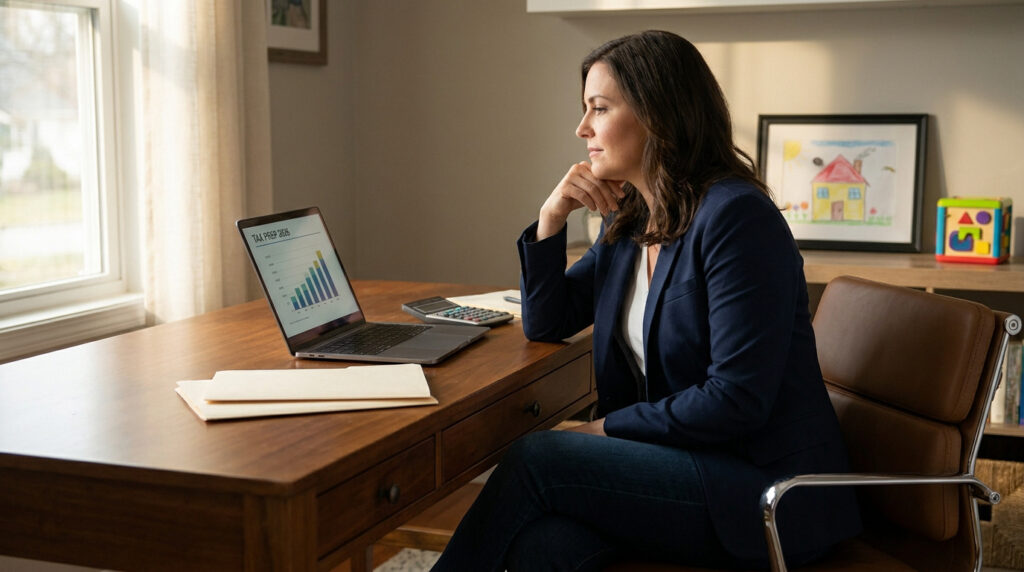
You might be juggling the school run, a full-time job, and a mountain of bills while wondering where you actually fit in. We are going to define single mom by looking past the stereotypes to explore the legal labels, the financial realities, and the intentional choices that shape your daily life. You will discover how to navigate the tax codes and support networks that turn this solo challenge into a life that truly works for your family.
- What The Legal Single Mom Definition Actually Looks Like
- Relationship Status Is Not A Parenting Style
- 3 Ways The Co-Parenting Reality Blurs The Lines
- Building A Life That Works For Your Family
What The Legal Single Mom Definition Actually Looks Like
We use “single mom” for everyone from solo parents by choice to those in a messy breakup. But the law sees it through a rigid lens of paperwork—and that matters. To define single mom legally, you have to look at the fine print.
Tax Codes And Benefit Eligibility
To be a Head of Household, you must be unmarried. You also need to pay over half of your home costs.
Head of Household: Must be unmarried, pay for more than half of household expenses, and have a qualifying person living with you for more than half the year.
Government assistance and subsidies depend on these labels. Eligibility usually hinges on specific income thresholds.
The IRS distinguishes between a marital rift and a legal filing. You must be legally separated or single to qualify.
These labels dictate your financial support levels. They are the keys to your administrative standing.
How Sole Vs Joint Custody Changes The Label
Legal custody covers big decisions, while physical residency is about where the child sleeps. Both impact your official standing. One is about authority—the other is about daily life.
Shared 50/50 schedules complicate administrative definitions. Often, only one parent can claim specific tax credits.
Residency hours directly dictate the child support payment flow. The clock determines the money.
Labels shift with court orders. Your legal status isn’t always permanent.
You’re going to be fine. Actually — you’re going to be better than fine.
Relationship Status Is Not A Parenting Style
Labels are sticky. But honestly — a legal document doesn’t define how you show up for your kids every morning.
Why Being Unmarried Isn’t The Whole Story
Society loves the singlehood label. But you might be unmarried with an involved co-parent. Daily caregiving looks different than a tax form suggests.
Living alone is another story. Many unmarried mothers live with partners who aren’t the biological father. They are present every single day.
A marital status is just paperwork. It fails to reflect actual parenting duties. Real work happens in the home, not the courthouse.
Active parenting is a choice. Relationships and responsibilities are different things. You decide how to show up.
Single motherhood stems from many realities: separation, divorce, widowhood, personal choice like IVF or adoption, and births outside of marriage.
The Rise Of Single Mothers By Choice
Some choose intentional solo parenting via IVF or adoption. They start families alone by choice. It is a proactive decision, not a fallback.
Demographics are shifting. More professional women opt for independent motherhood. They aren’t waiting for a partner to begin their lives.
There is no circumstantial trauma here. No messy divorce to process. These women start their journey with total clarity and focus.
Choice-based parenting is growing fast. It challenges the “broken home” narrative. It’s about building a whole home from day one.
You’re doing great. Actually — you’re doing better than you think.
3 Ways The Co-Parenting Reality Blurs The Lines
Even with a shared schedule, the internal experience of being a single mother often remains distinct and heavy.
Sharing The Schedule But Feeling The Solo Weight
Managing a household alone means your brain never actually clocks out. Even when the kids are at their dad’s, you’re still tracking school forms and grocery lists. The mental load stays entirely yours.
50/50 custody creates a strange identity split. One week you are a full-time parent; the next, you are living a solo life. It is a constant, jarring shift.
You are the primary decision maker. From healthcare to daily discipline, the final word always rests on your shoulders. It is a lot of pressure for one person.
Sharing time doesn’t mean sharing the stress. The emotional toll of parenting remains high, regardless of the calendar. You still carry the worry alone.
Dealing With Societal Perceptions And Stigma
Society views widowhood with instant empathy. But divorce often brings a side of judgment. It is a frustrating double standard that many of us feel daily.
We have moved past mid-century stigmas toward modern acceptance. Most people now recognize that families come in many different shapes and sizes, and that is perfectly okay.
Forget the “broken household” stereotype. A single-parent home can be incredibly stable and loving. My kids are thriving, and yours will too—because love, not a marriage license, defines a family.
Public perception is finally catching up. Reality is beating the old cliches. To define single mom today is to describe strength, not a deficit. You’ve got this.
Building A Life That Works For Your Family
Beyond the definitions and the labels lies the practical side of survival—money, time, and the people who show up.
Single mothers are primary victims of poverty. Many face utility cuts, and 37% miss out on child support benefits they deserve.
Balancing The Bank Account And The Clock
You need financial planning tools to survive. Budgeting apps and emergency funds are vital when everything rests on your shoulders.
The gender pay gap is real. We often face a “motherhood penalty” where we earn less than fathers, making the financial hill steeper.
But work-life balance is possible. Remote work and flexible hours are game-changers for those parenting alone.
Managing time poverty is a constant battle. Handling the clock is often just as hard as managing the money.
Why Your Support Network Is Your Secret Weapon
Your extended village is everything. Grandparents and friends provide the safety net that a partner usually would.
Don’t overlook digital support communities. Online groups offer advice and a place to vent when local help is scarce.
The psychological outcomes for kids are bright. Children thrive when they see a strong network of caring adults around them.
Remember—asking for help is a strength. No one was meant to do this entirely alone. You’re going to be fine.
Defining your life as a single mom means balancing legal tax codes, the heavy mental load of solo parenting, and your chosen support village. You aren’t just a statistic—you are the primary decision-maker building a stable future. Take charge of your financial rights today. You’ve got this, and your family is thriving because of it.